OCT 8 | 3:00 PM

Porta la tua asta ai collezionisti di tutto il mondo!
Pubblica oraIscrivendoti, accetti la politica sulla privacy. Annulla l'iscrizione in qualsiasi momento.
Barnebys HQ
Brahegatan 10
BOX 5038
114 37 Stockholm
Tutte le aste / Arte Antica / Ancient Egypt

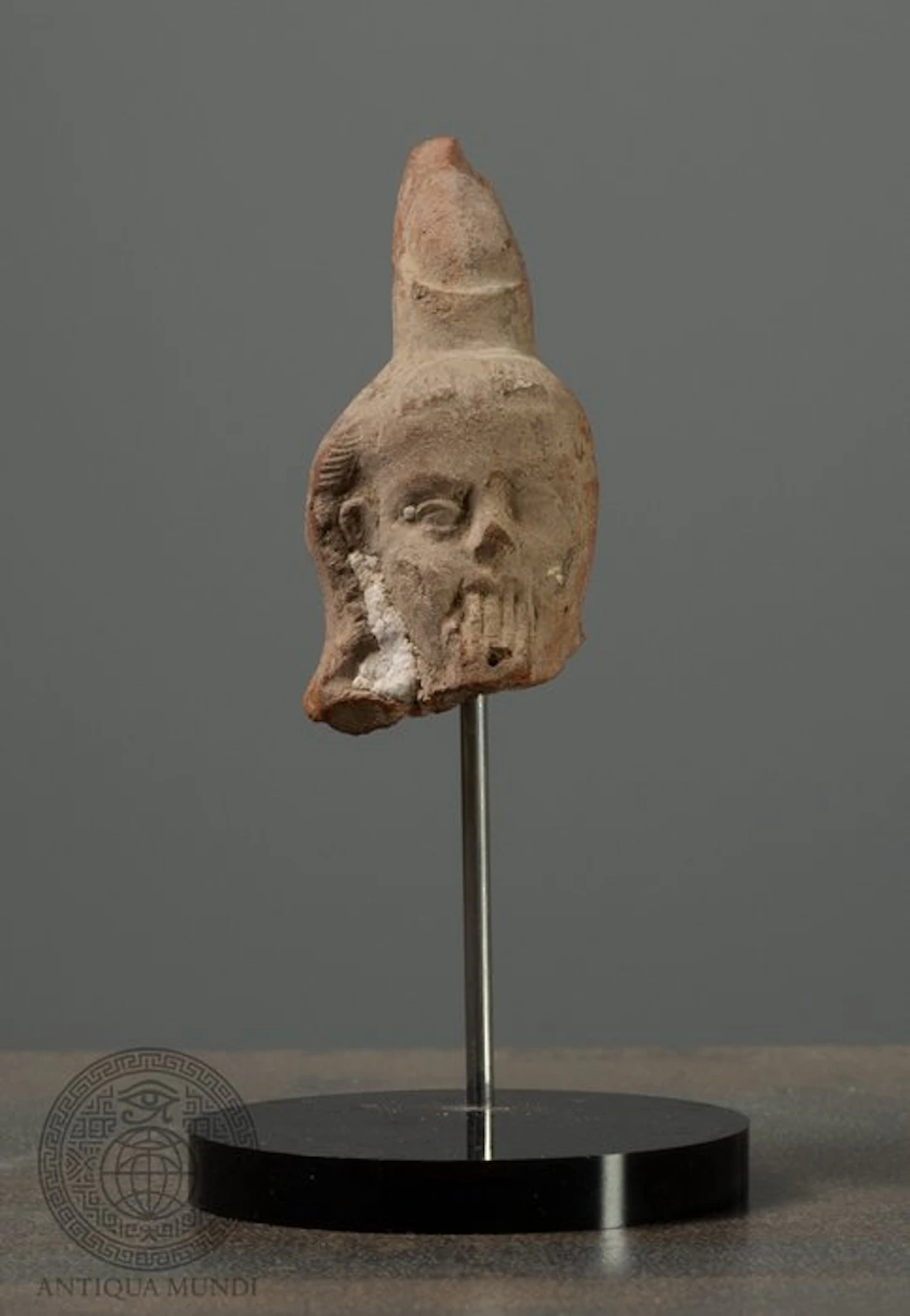
Ancient Egyptian terracotta fragment depicting Harpocrates (Horus the Child), dating to the Ptolemaic-Roman period. Preserved is the head of the originally larger statuette, together with part of the tall headdress and the characteristic hand raised to the mouth. The face is shown frontally with strongly modelled features, almond-shaped eyes, pronounced brows and a projecting nose. Particularly well preserved is the raised hand, with the individual fingers clearly indicated by incised and modelled lines. One finger is brought directly towards the mouth – the characteristic finger-to-mouth gesture of Harpocrates and the principal iconographic feature identifying the deity. The gesture derives from the traditional Egyptian representation of Horus as a child. During the Ptolemaic and Roman periods it became one of the defining attributes of Harpocrates. Parts of the hair or headdress remain visible beside the head. Above it rises a tall, tapering headdress or superstructure, the upper section of which is now missing. The statuette was mould-made from reddish-orange terracotta. The surface retains beige to grey-brown earthy and mineral deposits, together with lighter areas and whitish deposits. Where the surface is worn or broken, the orange to brick-red ceramic fabric is visible. Terracotta figures of Harpocrates were widespread in Ptolemaic and Roman Egypt and are associated particularly with private religious practice and votive contexts. Despite its fragmentary preservation, the strong facial modelling and clearly recognisable finger-to-mouth gesture give the piece considerable visual presence. Condition Fragmentary, as shown. Preserved are the head, part of the headdress and the characteristic hand raised towards the mouth. The body of the original statuette is no longer present. The upper section of the headdress is broken and missing. Old break surfaces and losses are visible around the lower and lateral edges. Age-related surface wear, minor chips, scratches and earthy and mineral deposits. The essential iconographic features – particularly the face, hand and finger-to-mouth gesture – remain clearly recognisable. Mounted on a modern metal display stand with black circular base. The modern display stand is used solely for presentation and is not part of the ancient object. Please examine all photographs carefully, as they form an integral part of the condition description. Provenance Formerly in the Madeleine & Erich Dammann Collection, Germany. Acquired during the collectors’ extensive travels between 1950 and 1970. The collection is documented in Germany by 1970 through historical photographs of the family residence and subsequently remained in continuous family ownership. The objects were acquired privately during the collectors’ travels. As was customary for private purchases made at local markets during the 1950s and 1960s, purchase receipts or invoices were generally neither issued nor requested. Historical photographs and biographical documentation relating to the Dammann Collection are available and support the long-standing provenance of the collection.
Stima:€210
Vai all’astaVedi tutti gli oggetti diCatawikioArte Antica
Stima:
€210
OCT 8 | 3:00 PM
Porta la tua asta ai collezionisti di tutto il mondo!
Pubblica ora
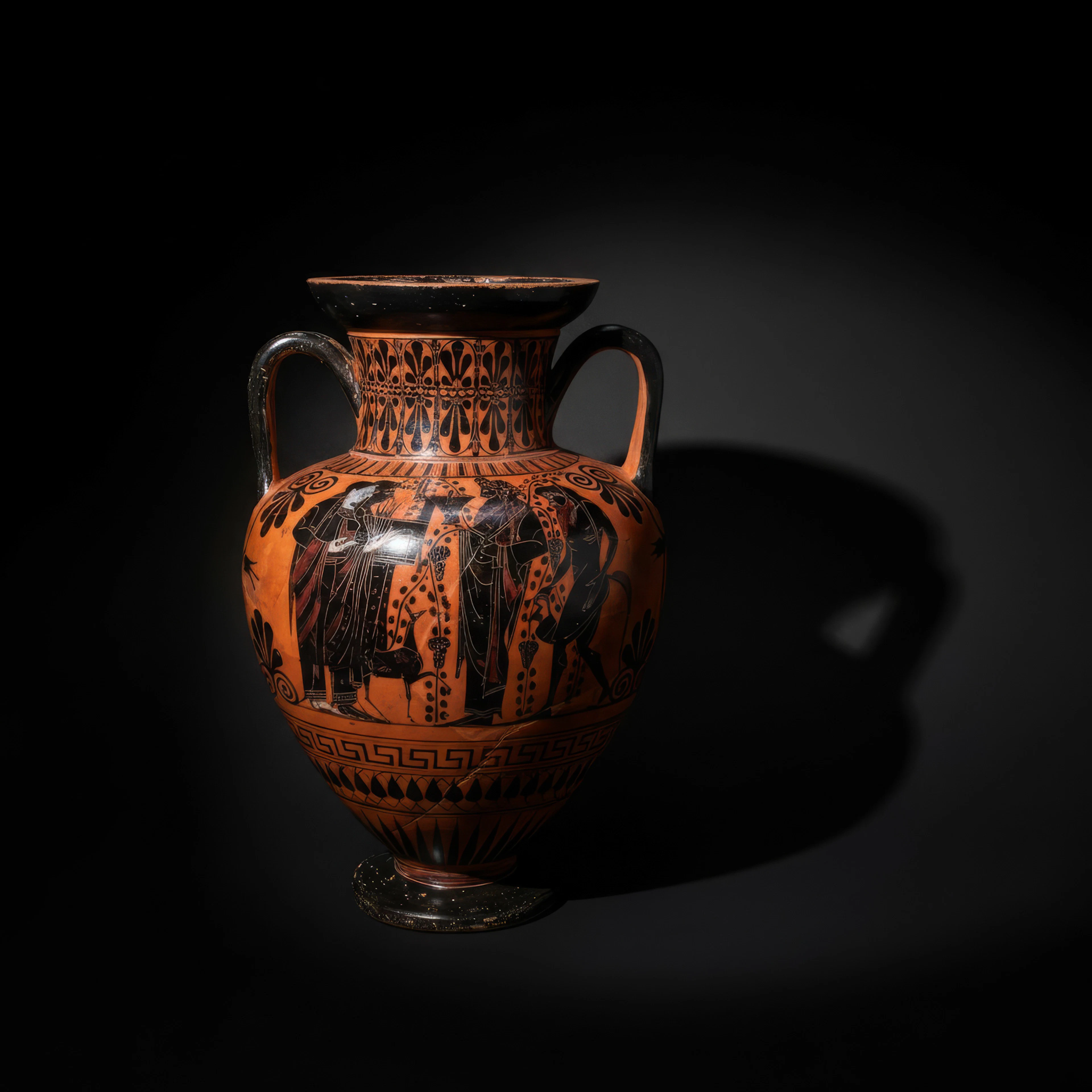
RARE ATTIC BLACK-FIGURE NECK AMPHORA ATTRIBUTED TO THE LYSIPPIDES
06/21/2026

€46,375.28
Stima: €16,156.37
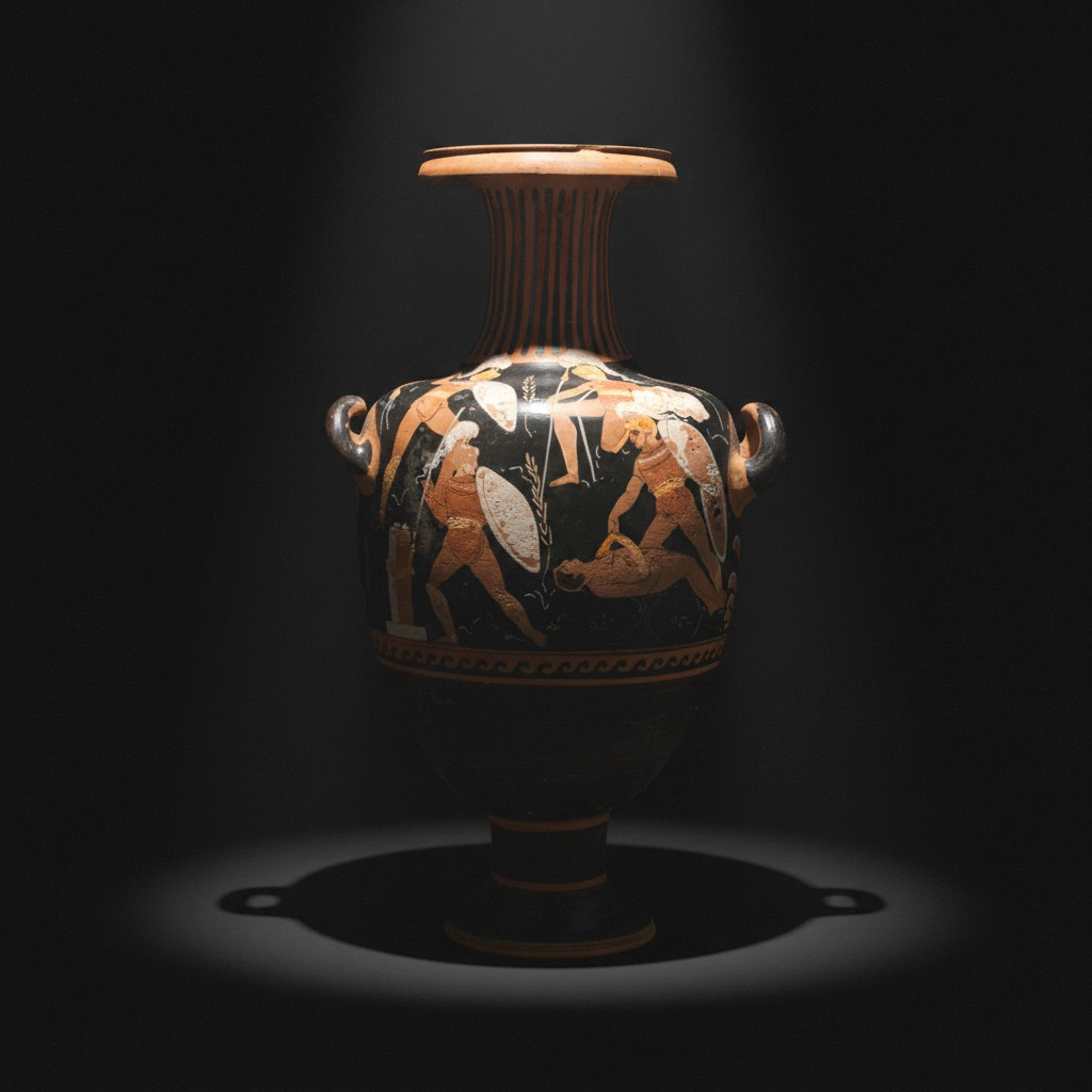
TL TESTED - LARGE GREEK APULIAN RED-FIGURE HYDRIA WITH HOPLITES COMBAT SCENE
06/21/2026
€10,434.43
Stima: €6,924.16